
Friday Five

Five for Friday
Every Friday I share five things that I’ve done or seen or thought about in the previous week.
Play: Wild Women
Last Friday I watched a play by a company called Wild Elk, with my friend Hannah. Wild Women is “a darkly comic collection of tales… Drawing on folklore, contemporary myth and lived experience, it explores transformation as rebellion. At its heart, Wild Women asks: what should we fear most… the monster, or the woman who disappears beneath expectation?”
It cycles through the trials and tribulations of five women; a lonely empty-nester who finds herself anticipating the landing of our alien overlords, waiting for them in the carpark of Aldi; a selkie girl constrained by the societal standards of the day; a teenager placed at the mercy of a predatory uncle; an aging actor tempted by experimental treatments to revive her flagging career; and a wife and mother who finds her obligations are bringing out a more feral side of herself when the full moon rises. At just an hour long, each character holds the spotlight for around twelve minutes as she performs her piece with the others remaining onstage, silently playing the roles of the supporting characters in each monologue.
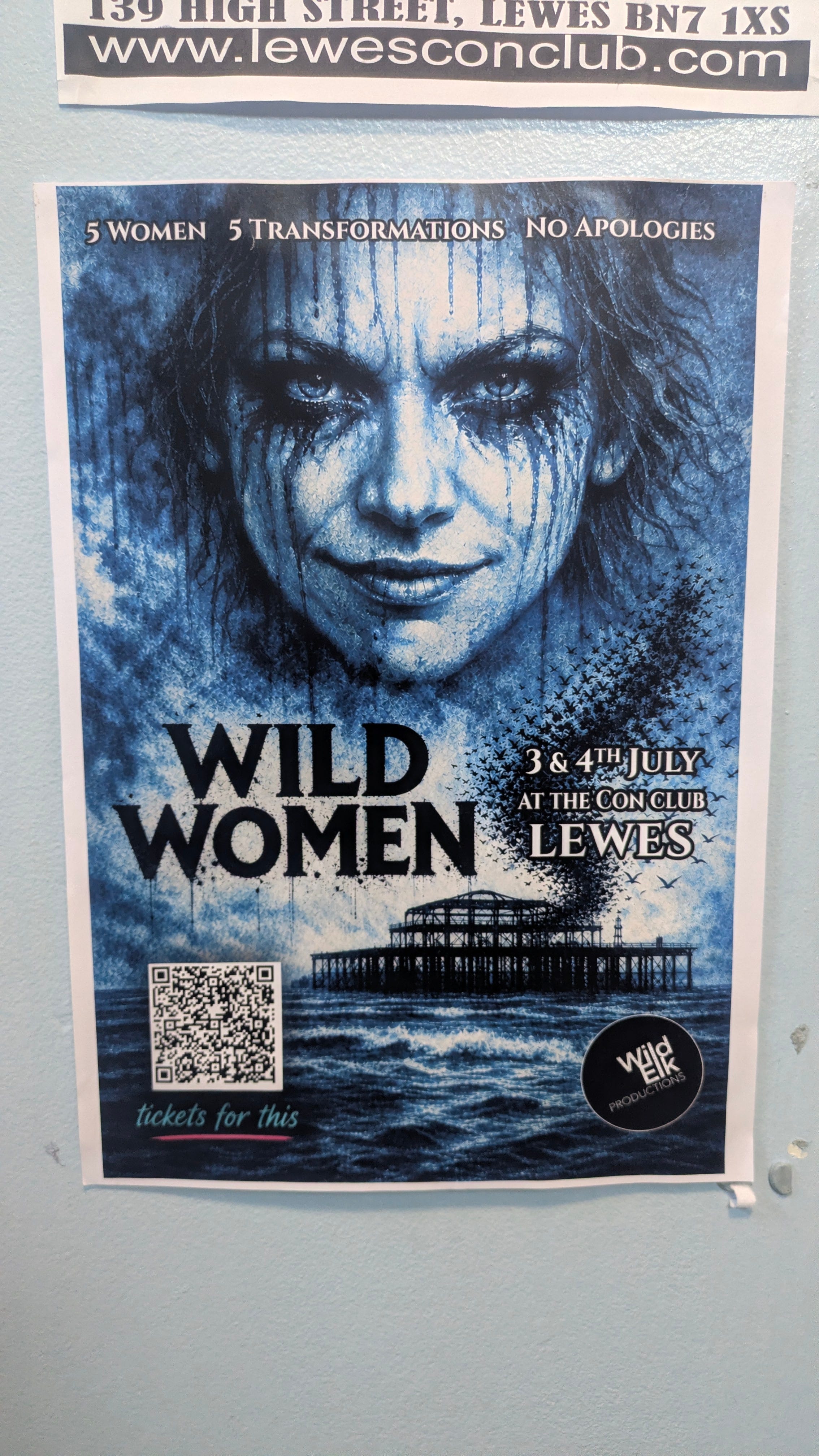
It was a powerful piece of work and the actors gave it their all—the physicality of each piece especially was extraordinary, the way each performer occupied their role so bodily and completely. I didn’t really buy the overall throughline though as the connections felt loose at times – more could have been made of the monstrousness and more could have been done to make it cohesive. I would have brought the selkie story to the present day, in line with the others, and explored the rolling back of women’s rights and the constrains of living in a female body and how others try to limit that through a modern lens. I would also have developed the ‘transformation’ strand a little more with some of the characters and played more deeply with how their transformations made them “monstrous” (I would have done something like make the girl with the pervert uncle into a Medusa-like monster, who believes she’s killed him with her eyes at the moment of abuse, and maybe shown the alien believer (my favourite one, as it happens) falling more thoroughly out of society because of her beliefs, transforming into a cautionary tale, the true outsider we avoid and pretend we don’t see). But it was a great night and it gave me a lot to think about.
Film: Persepolis:
I first read the graphic novel of this back in 2007 and enjoyed it and the recent death of the author, Marjane Satrapi, made me think of it again, so I was pleased when the cinema I volunteer in decided to show a memorial screening of the animated adaptation.
The film adapts Satrapi’s two Persepolis graphic novels. We begin with Marjane at the airport in Vienna, trying to decide whether or not to get on a plane to Iran. Then we flash to Marjane as Marji, a child being raised in Iran by her leftwing, politically active parents at the time of the revolution. Gradually her previously privileged life alters as the impacts of the revolution become apparent – she meets the uncles who’ve been imprisoned by the regime, she has to start covering her hair and behaving modestly. Marji is a natural rebel, visiting the black market to buy heavy metal cassettes, wearing ‘punk shoes’ (sneakers) and adopting a leather jacket that says ‘Punks Not Ded’ (sic) on the back. Her parents begin to fear for her and when a missile hits a neighbouring property and Marji sees her neighbour’s body, her parents decide to send her to a French school in Vienna to distance her from what’s happening in Iran.
In Vienna, Marji finds herself alone. Though she has friends, they play at being rebels and activists, railing against the bourgeoisie with no real comprehension of the realities of war or the dangers of rebellion. She takes lovers and experiments with drugs, but she’s unable to find a life that feels good to her and ends up on the streets, then hospitalized with severe bronchitis. Eventually she returns to Iran and her family, putting her veil back on and becoming an art student—though she’s frustrated by how censored the art she’s expected to make and study is. After she is caught by the authorities with a boy and faces a fine or lashes for her transgression, she ends up marrying him for ease, against her mother’s advice, and quickly finds herself trapped in a domestic life that she resents. After she divorces him, she decides to return to Europe again to try and build a life she can truly live.
Filmed in black and white in the style of the graphic novel, it’s heartbreaking and funny and moving and bold. Satrapi’s continual desperation and isolation as she tries and fails to mould herself into what’s needed to belong felt horribly relatable to me – the feeling of knowing you’re not right for where you are, or it isn’t right for, has been a long-running theme of my life, too. If you get the chance to watch it, I’d fully recommend it. Especially if you can watch it on the big screen.
Satrapi died in June this year, too young, but then we always think that about people who make good work. I think this is actually what is meant by only the good die young – it has nothing to do with youth and innocence and everything to do with the deaths of people who feel as if they still have so much more to give always feeling premature.
Book: The Surreal Life of Leonora Carrington
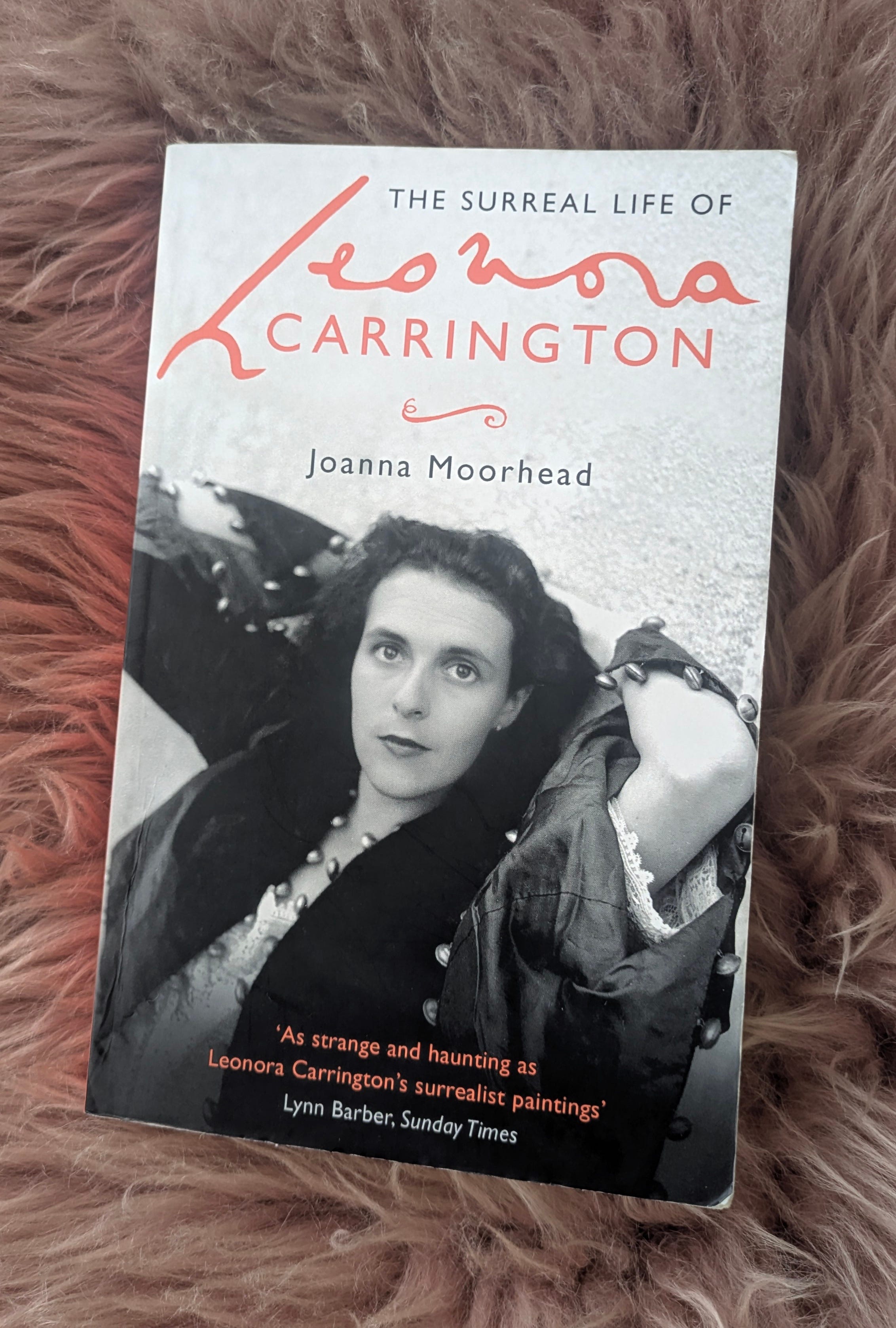
On Sunday I’m heading to a very, very, VERY hot Paris to see the Leonora Carrington exhibition at the Musee du Luxembourg. And in the meantime I’m working my way through her writing and writing about her, including this biography by her cousin, Joanna Moorhead.
Moorhead paints a full picture of Carrington’s life, with input and insight from Carrington. From her privileged upbringing in Lancashire as a new money debutante, through her meeting Max Ernst and the Surrealists and running away to Paris with them, her incarceration in a Spanish sanatorium, her first marriage, their flight to New York during World War Two, her move to Mexico and her second marriage, the births of her children, and the many, many works she created. It digs deep into her Irish and Celtic roots and how they informed her work even as she worked so hard to distance herself from her family and life in England, and it explores her friendships with other artists like Remedios Varo and Kati Horna. Of course it talks about Ernst – probably the part of her life, along with her incarceration in Santander, that are romanticised and mythologized the most—but it’s really interesting to get Carrington’s perspectives on both and unpeel the layers of fiction from her reality. She was a complicated woman utterly committed to living a life on her own terms and, as with Gwen John, I find it really inspiring.
I have loved her art for a long, long time and now I am loving her writing too. She’s playful and spiky and has such conviction about who she is as an artist and a person. Here’s hoping I absorb some of that.
Hobby: Painting
I am a shit painter. But I don’t think being bad at something means you shouldn’t do it, unless it’s something like surgery or flying planes in which case you definitely shouldn’t. But things like singing and painting and playing the guitar are safe enough places to enjoy yourself even if you’re not very good at them, and that’s painting for me. And I have a cheap little watercolour set and last weekend I bought some watercolour pencils and despite having literally zero idea about technique or perspective (LET’S CEZANNE THIS SHIT) I like to do it anyway.
So this week I’ve been going out for coffee and getting a little cake and then sitting and painting the sea and what I can see and there’s nothing more to this than that. I just think it’s nice to do things for the hell of it sometimes (not surgery or flying planes) and it was a lovely way to spend half an hour in the sun and so if you’ve got a tenner you’re itching to spend because buying things is the only way to temporarily fill the hole inside yourself excavated by trying to eke out a life in these weird, weird times, then I’d recommend going to the Works or Flying Tiger and buying a little watercolour set and a pad, and then buying a coffee and sitting somewhere and painting what you see.
And you know what, the thing is, the more I do this, the better I’ll get and that’s what LLM users and AI shills can never understand about creation of any kind. I might not become a world-class artist with work in the National Gallery but I will, if I keep trying, become more competent and I’ll understand more about how it works and that will stretch my brain and I’ll get joy from working at and quietly achieving something. I’ll embiggen myself.
Hobby: Tarot
I’m also shit at tarot, but again! I persist! My first deck was a Rider-Waite-Smith deck that despised me for being an amateur and didn’t even try to be cool about it. I made it the most beautiful cover which I stitched beads on and bought it a special little box to live in but I truly believe if it had been able, it would have spat in my face. I kept trying to earn its respect for years, until I eventually snapped and bought the Paulina deck, which is kind and benevolent, even when it’s telling me everything is the Ten of Swords. It’s a lovely deck to work with and the one I still do my daily pull with.
But now I also have Twin Peaks tarot and I LOVE THEM.
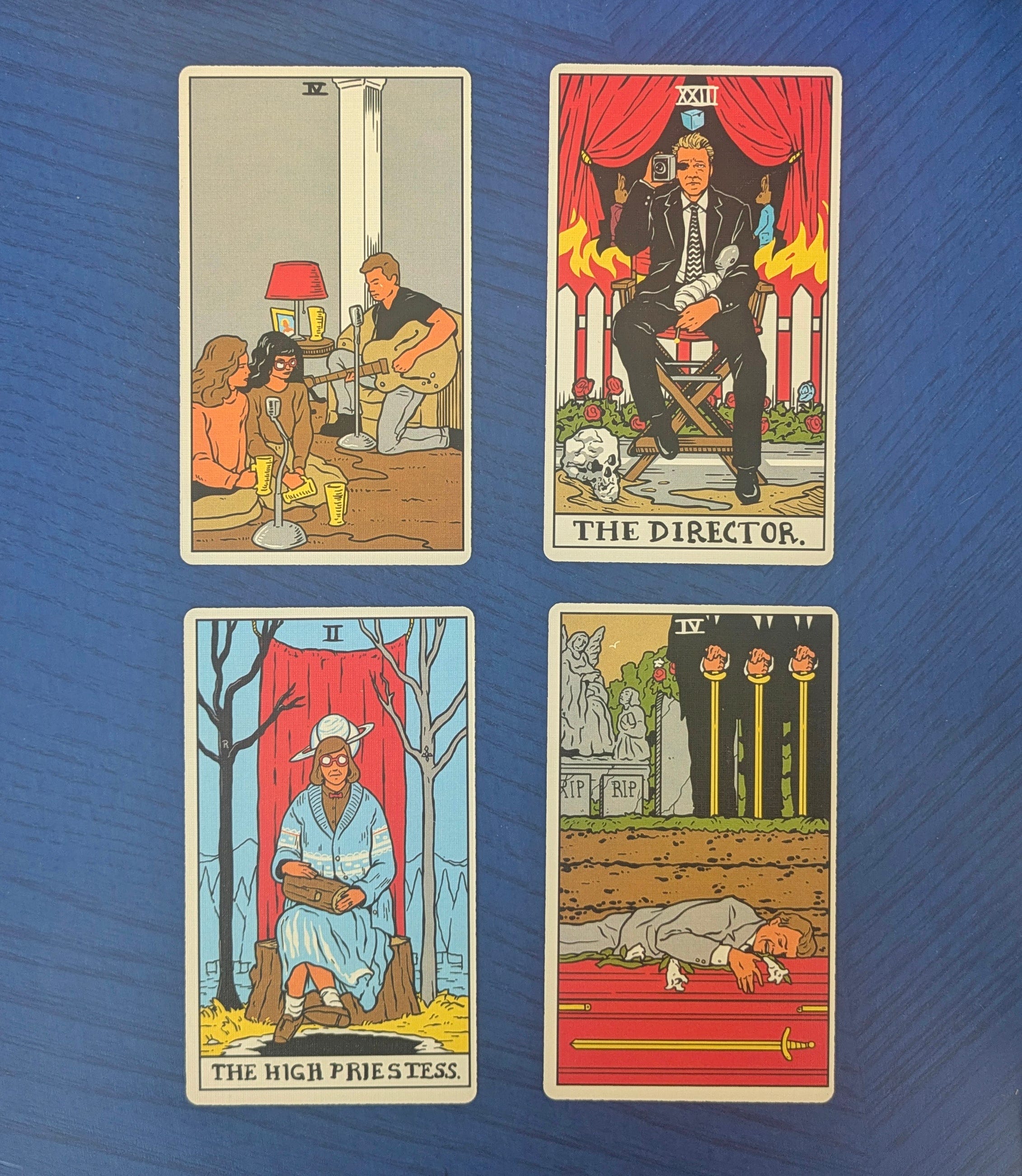
My friend Hannah—she of Wild Women watching fame above—presented them to me on Friday and I smiled until my face ached. They are so lovely and funny and surreal and I’m very excited to bring them into rotation. Also, I’m kind of hoping they’ll be my Baby Bear deck. The RWS were too hard, sometimes I think Paulina is too soft, but maybe Twin Peaks will be just right. I guess we’ll find out.
I did a little pull on both Paulina and Twin Peaks before I posted this, and this is what I got:
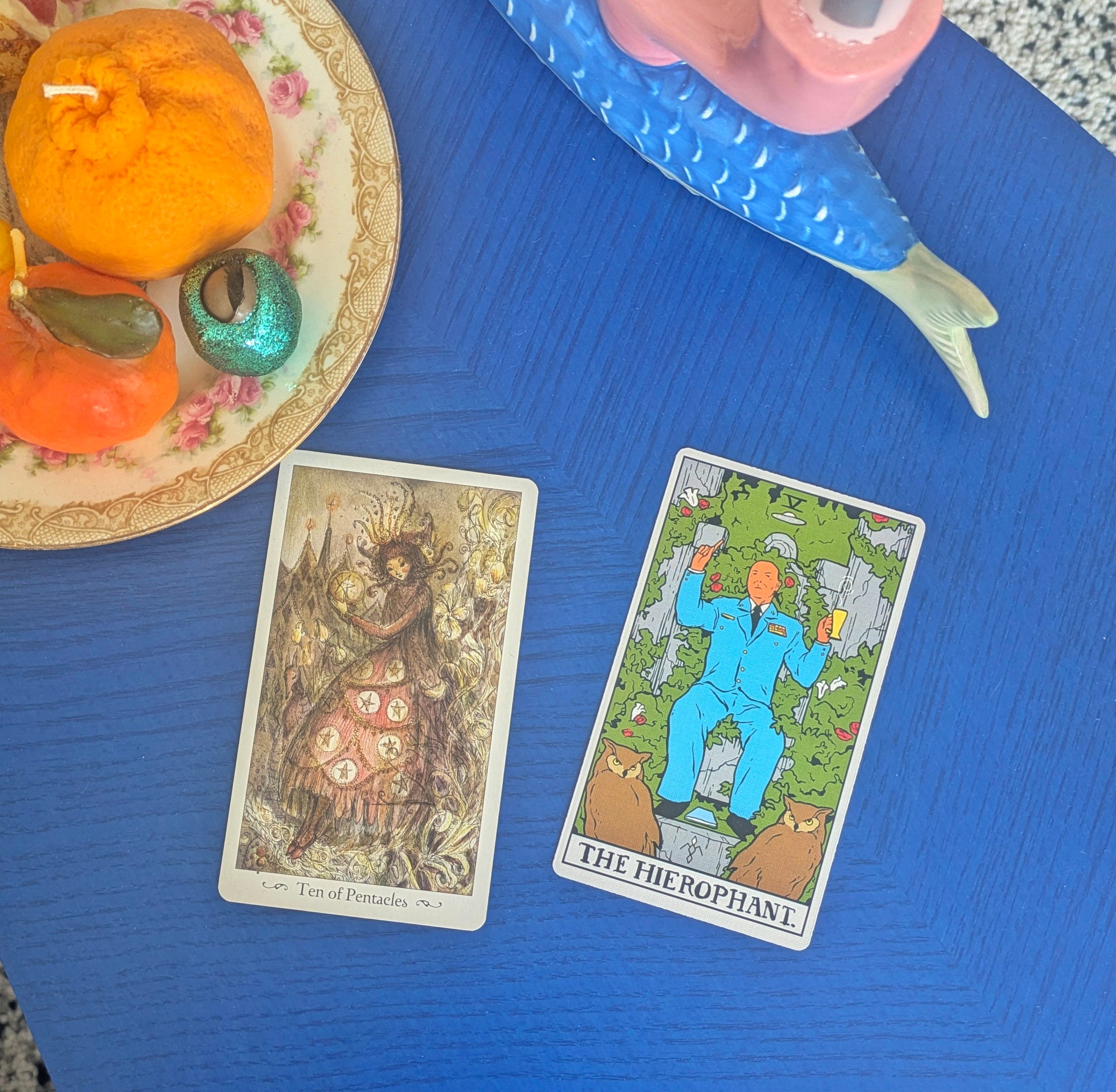
And, bringing some things together, I have pre-ordered the Major Arcana deck Leonora Carrington designed and they’ll be coming at the end of July, so I’ll be able to report back on those too.
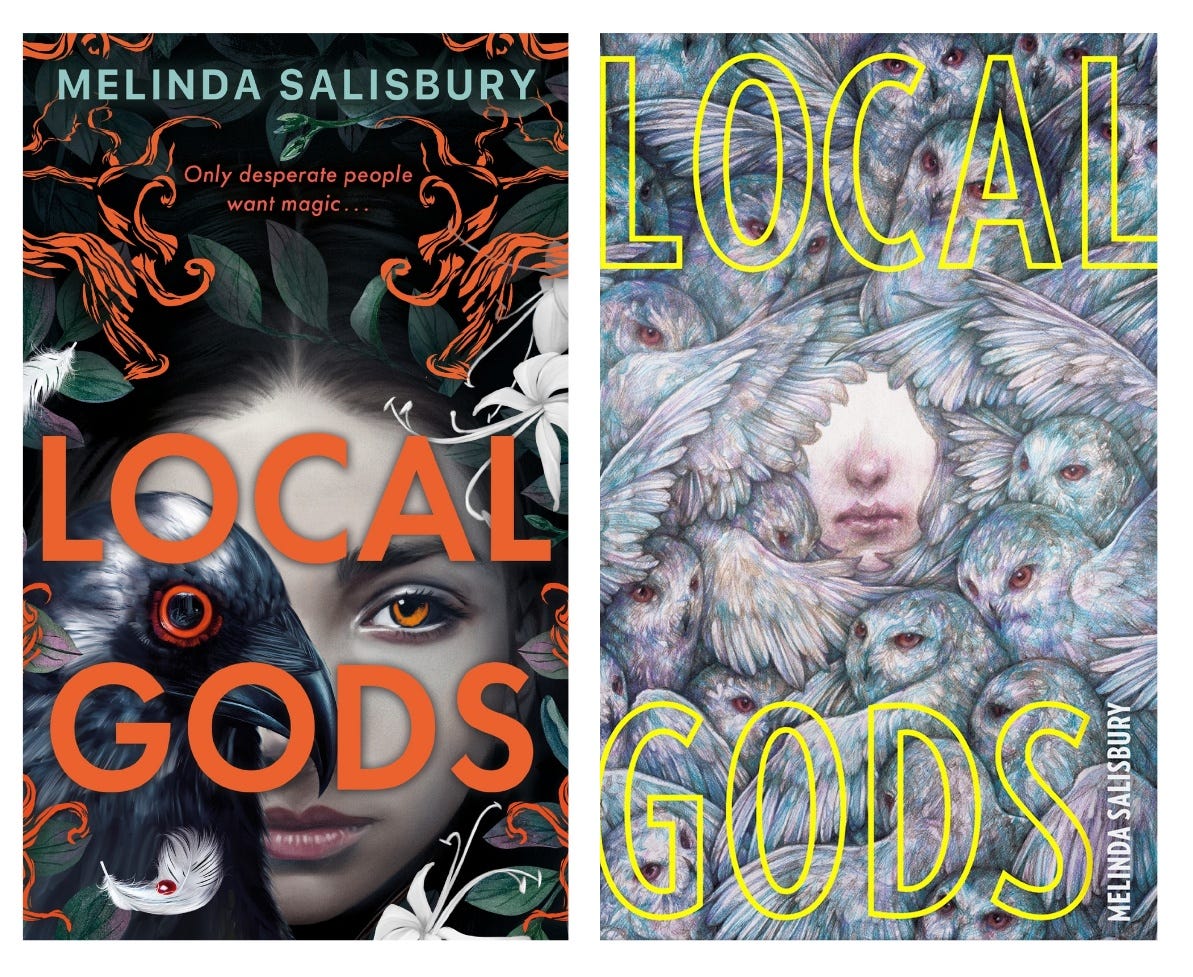
Just a casual reminder my next book LOCAL GODS publishes in three weeks! Pre-orders are really important to authors because they let bookstores know there’s a demand for the title and so they order more stock in, which in turn shows publishers there’s a demand for the title and they’re more likely to increase the book’s marketing and send the author out on events. So if you were planning to pick the book up when it comes out, consider pre-ordering to help an author (me) out, and guarantee a little treat for yourself a few weeks from now.